
When I think of the undercurrent of gravity moving this buoyant, lively poem, somehow I imagine one of those plums of the first line bobbing in a river.


The idea is that for the average person visiting LA, using a car to exit the airport won't be necessary at all. It won't be anywhere near as convenient as Chicago, but it will be a massive improvement.
God, I can't wait until this thing opens. If it ever opens!! ha ha! public transit in America is a nightmare

Terry Thompson lost $1.5 million on bets he placed with FanDuel. The company gave him VIP treatment — including a personalized video message from the Phillies' All-Star first baseman.
Genuinely stomach turning. Sports betting needs to be banned and these people deserve so much worse than what I want to say publicly online.

The theory is known as "three cueing." The name comes from the notion that readers use three different kinds of information — or "cues" — to identify words as they are reading.
It has been a constant refrain among my friends that when someone egregiously misinterprets something online, there is a real possibility that they literally do not know how to read. This is a bit of a joke, but also it's not, given the prevalence of three-cueing techniques used in American schooling. I recommend everyone read (REALLY READ) this page. They are not teaching 'reading'! It's guessing!
There are examples on this page of educational tools that tell kids to skip words that are hard! This is not teaching reading! This is teaching skimming!
Margaret Goldberg, a teacher and literacy coach in the Oakland Unified School District, remembers a moment when she realized what a problem the three-cueing approach was. She was with a first-grader named Rodney when he came to a page with a picture of a girl licking an ice cream cone and a dog licking a bone.
The text said: "My little dog likes to eat with me."
But Rodney said: "My dog likes to lick his bone."
AAAA!!!! AAAAAAAAAAAAAAAAAA
Goldberg realized lots of her students couldn't actually read the words in their books; instead, they were memorizing sentence patterns and using the pictures to guess. One little boy exclaimed, "I can read this book with my eyes shut!"
"Oh no," Goldberg thought. "That is not reading."
The neoliberal austerity regime has left no shortage of opportunities for alternative and counter institutions to fill the gaps left by the state, and capital continues to chase exponential returns on worthless scams rather than providing for many basic human needs. Those gaps, along with the social alienation inherent to capitalism, are the lowest hanging fruit for a dual power approach.
well-reasoned materialist analysis of how dual power can work, looking at examples from social democratic Sweden and islamic nationalist Palestine. I appreciate very much how this keeps the grounding of dual power not as an endgoal but as a tactic.
Three weeks ago, I watched you walk off a stage at the Lambda Legal National Liberty Awards, and I thought: she already knows who she is. That’s the hardest thing. Most people spend their whole lives trying to figure it out. You’re sixteen, and you’ve got it.
His purpose was pure. This isn’t to say it was innocent. Pure purpose is madness. Purity of any kind is intolerant to us. Either we besmirch it with our meddling, or it dissolves us.

What disturbs the sensible center of American political discourse most is that, should somebody succeed, it is very likely that a huge number of Americans would only find fault with the assassin for provoking a potential backlash, if they found any fault at all.
Scathing and brilliant criticism of Dangerous, Dirty, Violent, and Young: A Fugitive Family in the Revolutionary Underground by Zayd Ayers Dohrn, son of two Weather Underground members. The younger Dohrn has grown up a liberal, well-indoctrinated (and, to be fair, traumatized) to hate and question his parents actions. The author of this piece rightfully interrogates this assumption on the part of Zayd Dohrn.
“I was in a rage,” Dohrn told her son decades later in an interview for his book, “at the absolute stench of American life.”
Any serious accounting of the Weather Underground must take into consideration that they were young, idealistic, and a bit naive. But those are not unreasonable faults. You could say the same about the Bolsheviks, and I would. The USSR was full of naive dreamers. What the Bolsheviks had that the Weather Underground did not was numbers and training.
One must imagine if the Weathermen had killed a million people in the New York Tristate area with a decade’s worth of bombs. Would it have been better if the Weathermen had worn medals and planned their actions from the Pentagon?
I think a lot about the American New Left. An attempt, however flawed, to bring about an apocalyptic (in the original Greek definition) reckoning with American society, tragically splintered and rife with infighting, both genuine and manufactured.
I learned recently that my grandmother's brother was part of the SDS, and was jailed for it. Why, she didn't know. But it happened, at least. That era is not so far from us.
If you are reading this, sweaty with the worry that I am “normalizing” or “justifying” political violence, consider that I am only asking why you find so many forms of political violence so normal, so justifiable, so adequately met with well, it’s a shame, of course, while the specter of old radicals looms like a nightmare. Sometimes you must stand athwart history, yelling Are you fucking serious? Is it only that you get used to that stench of American life after a while? Is it worth it?
What is to be done?

With a bipartisan acceptance of innocent death as the cost of doing business in the Muslim and Arab world, it is not a surprise that a kind of casual contempt for its leaders and peoples oozes from the orifices of both Republican and Democratic administrations.
Excellent piece by Ta-Nehisi Coates about Kamala Harris' awful record on Gaza and her unceasing support of Israel. Naturally, it is the opinion of this author that Harris' stance on Gaza absolutely tanked her popularity among her own base, something that a functioning political party would probably take into account.
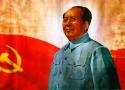
The Afro-American struggle is not only a struggle waged by the exploited and oppressed Black people for freedom and emancipation, it is also a new clarion call to all the exploited and oppressed people of the United States to fight against the barbarous rule of the monopoly capitalist class.
Thinking on 1960s radicalism in a global context after watching Malcolm X the other day. Happy Juneteenth I suppose.
But the reality of a leaderless and structureless movement started by 50 people is, who decides who’s in and who’s out? When millions are now joining you, how do you centralize messaging? How do you stay on target for what you are organizing? In a running theme of this era, the political explosion that MPL created against not a fascist military dictatorship, but a progressive, left-leaning democratic administration, gave open ground for the far-right to take control.
I think that it would be understandable for people to take issue with my growing feelings around needing strong, verticalized, centralist structures to build movements on, but it comes from the same feelings that motivate this piece. Horizontalism is a deeply frustrating way to organize an entire movement, or even worse an organization. Best case scenario is things are slow. Worst case scenario, you are destroyed by the same fascist forces you are hoping to defeat.
It is obvious we have seen consecutive ‘biggest protests in human history’ to little global systemic change. Spontaneous uprisings have been a feature of the 21st century. In some places, one political elite was simply replaced with another. In other places, the states and capitalists cracked down on the movement so hard it hasn’t recovered. Other places were broken by the political vacuums created with no real, organized working class movement to fill that gap.
Imagine for a minute, the ICE uprisings keep scaling upwards. Millions and millions are shutting down the country. Rolling General Strikes from state to state. Then mass marches on the capital, and Trump’s goons flee to Epstein’s Island or some other far hideaway. Who, or what groups, will take over the political power of the country? How will the next decision get made? Did classes disappear? Did the social ills created by US settler colonial society disappear?
This is the key question and my greatest frustration with the modern American left. I am tired of "street protests". I am tired of "calls to action". Not because these things are bad, or even unnecessary, but because in order to work they have to be backed up by concrete organization, something that I feel we are terribly lacking.
So when looking at the vast field of lost revolutions of the 21st century, and the gravestones of all the martyrs we lost along the way, we have to ask ourselves, did we organize correctly? And the answer from the available evidence in most cases says we didn’t. Now we are facing an even worse ecological crisis, rising fascism, a new state of imperialist world order, and mass fascist violence in the streets of the capitalist hegemon—the U.S.. What changes have been made? Are we organizing differently from 2011? Because if we wish to succeed, we must.

Muslim delegates and attendees hoping to participate in the state Republican convention were shunned and rejected by members as they espoused themes of party unity ahead of the November election.
Look, man. Come on. Come on, lmao

Heidi Blake reports on how the defining figure of the manosphere built a fortune—and became a political force—by systematically exploiting women.
Well-written and horrifying. I was particularly struck by the bit about how the ineptitude of police in investigating the Tates arguably set all this in motion. Of course the police wouldn't give a shit, half of cops love the shit that Tate does.
I am always a bit suspect of stories that position individual right-wing figures as Great Men, and I think in the grand scheme of things Tate is less of a central figure than he is a smooth operator in a Western political environment that has little cause to fight him.
His base in Romania is, of course, pertinent here -- a post-Soviet state plundered by capital in a revenge drive against the population for daring to attempt a more equitable way of life. Of course the Tates flourish there, the goal of American policy of the last hundred years has been to carve up the Eastern European nations for precisely this sort of horror and human rights abuse. This is what the United States has created.
Which again is why I think if I have any major qualms with this (incredibly in-depth) work of biographical journalism it is the fact that the author does not seem to grasp the political dimensions here, at least not fully. Tate is not a leader of a new movement, he is a beneficiary of a very old one -- anticommunism, at the hands of the United States.
Tate's particular brand of hyper-misogyny, right-wing agitprop, et cetera -- this is what the last century has been set up to create. Horrors upon horrors.

U.S. oligarchs desperately want to build the biggest right wing propaganda and infotainment machine ever constructed. One that pummels the misinformed plebs with soggy class warfare and divisive culture war agitprop. But they're all profoundly stupid, wildly overconfident, and drunk on sycophancy.
Good, stirring writing with only one head-scratching implication of Evil China, which I have to call out because it is stupid. Rest of the piece is good though. I appreciate the anger!

Voluntarism, programmatic idealism, and strategic moralism are typically treated as separate mistakes. This essay argues that there is one error in three domains—the substitution of an ideal political form for material analysis—and that only reversing the direction of determination can correct it.
Don't agree with 100% of this piece but found it an interesting, if deeply academic-brain written, read. Loved this little tidbit from the American analysis section:
The absence of an American labor party is not a contingent historical lacuna waiting to be filled by the right organizational initiative. It is a structural feature of American class politics that has shaped the forms in which class interests can be expressed and the terrains on which they can be contested. The two-party system is not simply an obstacle to socialist politics but a terrain through which class forces are organized. The question of what engagement with that terrain can produce is a strategic question requiring analysis, not a moral question requiring a verdict.
Where I principally break with the analysis is with takeaways like this:
The democratic and electoral terrain is not, as the abstentionist position maintains, simply a mechanism for reproducing ruling class hegemony without remainder. It is the primary terrain on which the political consciousness of tens of millions of American workers is being actively shaped, and the question of whether the left engages with that process or withdraws from it in principled disgust is not a moral question but a strategic one with determinate political consequences.
To which I would say: Is it? Did the Sanders campaign make actual waves in the American proletariat? Is Mamdani a win for socialists, or is he an absorption of New Deal liberalism into the Democratic Party program? From within the borders of the States, I don't think these are easily-answered questions. Working within the electoral frame has some advantages, but I truly doubt the easy answer of "a lot of people vote, therefore that is where power lies and where we must strive". American voting is a complete mess -- both in terms of participation as well as upper class capture. Not to mention the number of institutions in the American government that are not beholden to any mass politic (like the Supreme Court, or in a broader sense the American military). It's things like that that make me doubt the so-called "democratic route to socialism".

We created fake profiles as young people. We then went and asked it a series of structured questions, with a child who is thinking about killing themselves. Within two minutes we were able to get ChatGPT to tell us how we can [harm] ourselves safely.
Kind of ridiculous that the rest of the article exists when this passage is in it, but even the bourgeois press sometimes lets some true things slip through.
To condemn an anti-imperialist state that is actively improving the Global South and other oppressed peoples’ material conditions is to condemn internationalism itself. This is akin to tying a weight around your ankle before running from a predator. Iran has done more for Palestine and Sudan than any “nonviolent protest” ever could.
[The No Kings website] then goes on to cite the anti-China protests in Hong Kong, where demonstrators used yellow umbrellas and yellow ribbons used to represent resistance to Russia in Ukraine, as its two specific examples to align the movement with. Both of these examples are in line with the US foreign policy interests shared between the Democratic and Republican parties. In the case of the Hong Kong protests, in both 2014 and 2019, the US government was accused of directly interfering and helping to direct the demonstrations, especially through its CIA-linked soft-power projects like the National Endowment for Democracy (NED).
I have so much suspicion around No Kings and this article gets at one of the main reasons why.
When sexual harassment allegations against Thomas by Anita Hill, a Black woman, came to light, Crenshaw found herself watching what she called an intersectional failure unfold.
Reading Kimberlé Crenshaw's work in college was one of the first eye-opening experiences I had about structural racism in the United States. I'm happy to hear that she is also somewhat critical of the way that "intersectionalism" has become a thought-terminating cliche in the world of left-liberal work.

The legal right to defend oneself has always proved far more fragile when exercised by the very people who most need protection.
The on-paper legality of carrying arms is irrelevant compared to the social legality of carrying arms, which will always be illegal for the targeted classes. We live under a dictatorship of capital, and capital has strong reasons to discriminate against social minorities. Trans freedom to live is non-negotiable in a true progressive future.