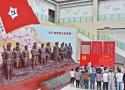
Self-reform is how the CPC answers the oldest question in Chinese statecraft: how to escape the historical cycle of rise and decline. Its answer is to never stop struggling, and never let up on its fighting spirit in order to improve and to better represent the interests of the people.
Funny that I ran into this right after posting (positively!) about this piece on Ukraine from Fight For A Future, which is a publication that I do not agree with about their views on China (though I will admit they are not the rabid anti-China sort like many other worse members of the commentariat).
Carlos Martinez is one of my favorite writers on modern China not just because he is a fanboy (which I think is completely fair given the state of modern China compared to most of the US-aligned global West) but because he is a skilled writer and arguer about the ways that the CPC is specifically utilizing Marxist-Leninist thinking in their operations. Not shying away from fair criticisms, but taking the stance that adaptation is crucial to any ongoing communist project.
Where I think the PRC, and the CPC specifically, excels is the understanding that progress will take a long time, and thus it is imperative that a socialist project survive, even if that means taking some Ls along the way (and for what it's worth, I think the PRC has made a lot of mistakes, both historically and contemporarily! I just also think those mistakes do not change the progressive direction of CPC leadership). Or, to quote Martinez:
Ultimately, however, the test on these new battlefields is the same test the CPC has passed before, in a new form: Whether it can keep identifying the principal contradiction of the period and mobilizing society to resolve it, without either capitulating to external pressure or abandoning the peaceful, people-centered and win-win character that has defined Chinese modernization. On the record of the last 105 years, I would not bet against the CPC and the Chinese people surmounting these new challenges.


Whether a state is socialist should be judged by real-world outcomes rather than rigid ideological purity.
I wrote about it a bit on the Big Blog already, but Deng Xiaoping and the 1980s China period (that was the immediate precursor to China's current era of Xi Jinping leadership) was a huge influence on THE REVISIONIST. I like this post.
It is now well understood that the Chinese Communists have interpreted and carried out a continuation of the struggle for national liberation in order to cause this neo-colonial project to fail: there is no political independence without economic independence. At least those who declare themselves Marxist should understand this truth clearly!
The great Domenico Losurdo on China and Chinese Socialism. A great in-depth analysis of China's economic socialism. Loved this.
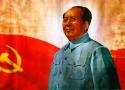
The Afro-American struggle is not only a struggle waged by the exploited and oppressed Black people for freedom and emancipation, it is also a new clarion call to all the exploited and oppressed people of the United States to fight against the barbarous rule of the monopoly capitalist class.
Thinking on 1960s radicalism in a global context after watching Malcolm X the other day. Happy Juneteenth I suppose.

Some Chinese module makers are turning their backs on the big three RAM suppliers.
Economist-brained take I know but I do think it's kind of inevitable that manufacturers will figure out eventually that Chinese-made computer hardware does the job just fine. And hopefully that means that RAM/HDD/SSD prices can start going down again, because good lord.
The Chinese worker who slices a finger has access to a public health system; everyone in China today has guaranteed food, housing, clothing, education, healthcare, clean water and modern energy. That is not a quantitative difference in degree of suffering. It is a qualitative difference in the nature of the society: the difference between a state oriented towards the pursuit of private profit at all costs and one oriented – however imperfectly – towards common prosperity.
Jacobin's brand of socialism is increasingly annoying to me, and this article gets at part of why. There's a surface-level nature to a lot of the critiques ran in Jacobin, focusing on the aesthetics of things rather than their actual nature.
What the review offers, in the end, is an example of what Michael Parenti called “pure socialism”: measuring actually existing socialist construction not against the real alternatives available to a poor, encircled, formerly colonised or semi-colonised country, but against an imagined frictionless utopia.
If the policies of a socialist state are not based on the material conditions of that very society, it will undoubtedly fail. This is, without question, crucial to the success of socialism. The material conditions of each society differ, so of course we need to study and act upon them carefully.

Cyberpunk 2077 at 1080p with FSR3 Quality and frame generation averaged 88 fps, compared with 232 fps on an RTX 4060 and 243 fps on Intel's Arc B580. Black Myth: Wukong reached 56 fps, while Forza Horizon 5 managed 48 fps on the Low preset.
Really strange framing on this article where the bottom line is that it offers 3060-level quality for $450, which in this current hardware market is perfectly good.
The US, then as now, remains committed to undermining and destroying Chinese socialism, and has relied heavily upon thinly veiled, CIA-sponsored bodies like Radio Free Asia, National Endowment for Democracy, and the fanatical anti-communist and fantasist Adrian Zenz, with the sole objective of bringing about the fall and disintegration of China, much as happened to the former USSR and Yugoslavia.
I find the propaganda project of the United States around the Tiananmen Square protests in 1989 to be a really useful example of truth-twisting. Yes, there were legitimate grievances with the protests -- often centered around the dangerous repercussions of the 1980s Reform and Opening Up period and the lessened rules around capitalist development in China. Also, mass chaos in the streets is not like, good. The nature of the PRC and the CPC in general is one of holding onto power as the ruling class and party of Chinese society, thus it is in their interest to quell uprisings. I don't see this as contradictory to the mission of any proletariat-ruled society, because part of ruling a society involves making hard decisions about how to handle internal unrest.
The fact that China managed to fend off -- then and now -- attempts to replace the CPC with a more capitalist government should be seen as a massive achievement.

China’s BYD made plenty of headlines when it debuted its second-generation Blade Battery and latest-generation Flash chargers. When combined, the two can make EV charging basically as fast as getting gas, with up to 1,500 kilowatts going from the DC fast charger to the lithium iron phosphate (LFP) pack.
Things are happening... in China.
H-PRC is the H-Net presence of the PRC History Group, a network of scholars with interests in the history of the People’s Republic of China. We define history broadly, to encompass a wide variety of disciplinary approaches, and we understand the history of the PRC to include eras prior to the official change of state power in 1949.

Ali Kadri is an esteemed Professor at various institutions around the world, as well as the author of many important books including Arab Development Denied: Dynamics of Accumulation by Wars of Encroachment, The Accumulation of Waste: A Political Economy of Systemic Destruction, and The Unmaking of Arab Socialism.
Okay, I'll admit that I haven't finished listening to this episode yet. But what I've heard so far is excellent. A great breakdown of the role of the CPC in constraining and managing capital excesses from the Mao to Deng era and beyond.
In Commemoration of the Twenty-eighth Anniversary of the Communist Party of China
classic piece, also notable in comparison to the piece right before this -- i feel like you can see the presaging of modern China in a bunch of this.
State and Capital I: Understanding How the Chinese Communist Party Has Redefined the Function, Boundaries, and Political Position of Capital
fantastic piece on the role of capital in China.
Extracted from an essay published in April 1917 (in Hsin ching-nein). Mao Zedong.
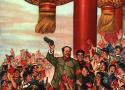
A spectre is haunting China—Mao Zedong. This is not the ossified image of the national founder found in official party histories, but a living, breathing idea rediscovered by the country’s youth. The evidence for this resurgence is both unexpected and unmistakable, and its most dramatic stage is China’s elite universities, where the country’s political, academic, and business leadership is cultivated.
The following article is the result of a visit to the People’s Republic of China to participate in celebrating China’s 80th Anniversary of its victory over Japanese fascism. Dee Knight and DSA China Working Group coordinator Anlin Wang were part of a five-person self-organized delegation of DSA members.

The first version of this article was written after the first three months of being back in China after too long away. The version written then contained many immediate impressions and experiences, which I interpreted on the basis of extensive earlier research. There is an…
For Marx, theory was never separate from practice. This remains the key divide between Marxism-Leninism and Western Marxism, especially in debates over the People's Republic of China.
Most of what we hear about Tiananmen in 1989 focuses on student activists, since they dominated Tiananmen square itself and waved banners demanding “freedom and democracy.” However, the real history of the protests is a bit more complex.