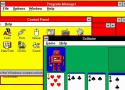
[...] I went digging for the credits of the Microsoft employees who worked on the user interface back then and found my way to Virginia Howlett, who joined Microsoft in 1985 as the company's first interface designer, and worked there up through the launch of Windows 95.


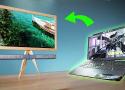
I'll admit, I never considered using old laptop motherboards as the base for a homemade all-in-one PC. This is an intriguing option, even with some obvious downsides.

At some point, I stopped thinking about it as a project. It was just a tool, same as the other tools around the shop.
I found this video a really cool example of custom hardware manufacturing. I would love to make something like this at some point -- I think the wave of "cyberdeck" fetishism is a bit goofy, but seeing people actually creating devices that work exactly in the ways that they need them to is so cool to see.
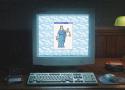
All eleven District Attorneys' offices run on a shared database called DAMION, which holds the record of essentially every criminal case in the state and is roughly twenty-five years old.
Interesting story if a bit AI-wonky, however what you really need to see in this piece is the screenshots of Win95-era justice department software that is apparently still in use. Wowie

The first stop is removing the toolbar and the sidebar, and any other bars. The second is switching to the icon view, and picking the right window dimensions. What’s needed next is a link to the Applications folder. The last ingredient? A custom background that’s placed underneath and creatively uses the fact the size and the position of all the icons are known.
Lovely little collection of Mac install windows. h/t to waxy.org.

It is, genuinely, a dramatically more empowering way to use your computer than the alternative, and it will enable to think about your computer as a tool in ways that are completely different.
This website was made with the command kind in Linux! Almost everything I do these days on The Computer includes using the command line and guess what? It's great. It's a really good way to interface with a computer as it turns out. I agree with Bruno.

So, you may notice things look a bit different around here.
Bruno moved his blog to a proper selfhosted option instead of Bear, which is something I am also considering, so this was a great read of what I should expect.

GDID is the persistent Windows ID that helped FBI trace a Scattered Spider hacker despite VPNs. Here's how it works and how to limit it.
Another great reason to use Linux.

Neverclick uses on-device computer vision to label everything clickable with keyboard hints, so you can navigate any app without touching a mouse.
intriguing. and I appreciate the dev being honest about the AI usage (sounds like extremely minimal). The program itself does not use any LLMs as far as I can tell, no phone-homes. as a big fan of "hands stay on keyboard" I like this idea.
Child labor is very “useful” if you want cheap labor. It’s 100% deplorable to use it or accept it. Child labor is a monstrosity. But if “useful” is enough, do we need to accept child labor? [...] Usefulness is a very weak argument in support of something.
Really fun technical breakdown of all the computers in Jurassic Park (1993). I love this stuff.
The AMD BC-250 was built to act as a crypto-mining device, but as that scam is winding down there are a bunch on the market for reasonable prices. As crypto miners often have similar performance needs to gaming PCs, gamers & devs are collaborating on a simple path to make the BC-250 into a relatively simple DIY mini gaming PC. I love stuff like this -- it's basically e-waste at this point, and giving it a second life as a reasonably capable linux PC is a great move.
Three years ago I came across an interesting paper written up by a Microsoft employee, Kent Sullivan, on the process and findings of designing the new user interface for Windows 95. The web page has since been taken down - one reason why I'm a bit of a digital hoarder. It specified some of the…