
The propaganda is often visibly shoddy. But this paradox is resolved once we realise that Israel’s hasbara apparatus does not aim for plausibility. Its mission is expediency, to find something that might introduce a trace of doubt, or give those who wish to look away a reason to do so. [...] But while outfits like the legitimisation cell manufacture these pretexts, the demand for them comes from a Western ear that is desperate to avoid the truth.
I genuinely feel like in some years from now, perhaps a long time but hopefully not so long, we will see the long suffering of the Palestinian people as one of the most glowing, hot-red contradictions of the current American imperialist world order. And, as Stalin said and I am paraphrasing, it is where those contradictions are the sharpest that we can start to see a different future.
Ultimately the problem lies entirely outside of documentation or argument. For Western institutions, the excess of evidence has produced the opposite of a crisis of conscience. Instead there is a saturation that enables the desire to put this all behind us. Bearing witness to everything, registering the horror as it passes through the digital feed, creates a comforting illusion of a debt discharged, of a crisis already dealt with. This is why more evidence fails to move the needle. The Western subject already has the facts; what they require is a disruption that prevents this sense of closure. Even when the evidence compels an admission that genocide is taking place, what follows is too often a passive resignation: an assumption that nothing can be done about this truth, or that naming it is all that is required, while Israel carries on killing and dispossessing. The structure of moral stupidity functions by converting raw evidence into the mere performance of its own absorption. Witnessing is revealed to be an insufficient means of preventing a genocide.
[...]
All of this is designed to prevent a single, shattering realisation: that to truly hear Palestine is to hear a total indictment of Israel, but also of the global order that sustains it. This is a system built on the foundational myth of a “rules-based” liberal internationalism, which is underpinned by the flow of Western capital and weapons, and dependent on a selective and racialised definition of humanity. Moral stupidity is essential to the perpetuation of this order.
The role of the intellectual -- the writer or poet or philosopher -- is also critiqued well here alongside that of the (presumably Western) observer.
The intellectuals of this era did not speak on behalf of the collective; they were continuous with the people, constituted by the same dispossession, and subject to the same erasure. [...] One way to measure this collapse is to ask: can one imagine a writer doing today for the Palestinian Authority what Kanafani did for the PFLP, or what Darwish did for the PLO? The question answers itself.
The intellectual is often, but not always, situated as some part of the more prosperous native classes. This is as true in Palestine as it was in turn-of-the-century Russia, and as such there are contradictions in the ways that the intellectual can support a revolutionary movement. In order to truly "support" such a movement, they must accept that the future they are building may inherently remove their class position (or, at least, shake it critically). This makes the intellectual a complex figure! They can be interlocutors with the greater powers (imperialist, capitalist, whatever) but they are also vulnerable to counterrevolution by their very position -- it would not be unusual for them to side with a counterrevolutionary (or, in the Palestinian case, imperialist) force because that force would allow them to maintain a comfortable position.
This leads to a dangerous dynamic between the national liberation forces -- in this case groups like the PLO and PFLP, and now Hamas -- and the intellectual classes. To be sure, this can be seen even in modern work from Palestinian intellectuals who are well-worth lauding as much as criticizing.
All of this is not to say that "the intellectual" as a figure is inherently counterrevolutionary or inherently a class enemy or anything like that -- but that the position of the intellectual within the national liberation struggle is... well... nuanced! Complex. Fraught with contradictions.
It’s not simply that intellectuals talk while others fight, or that fighters distrust words. The real crisis unfolds when speaking and acting finally meet. When the intellectual takes the logic of their own analysis seriously enough to act on it, they encounter the full weight of the abandonment that the words had been circling around all along.
Also touched on here is the role of Germany, which I do think is worth noting specifically. The creation of Israel as a state -- imperialist outpost as it is -- is inextricable from Nazism.
Some years ago, a German Jewish friend visited me in Ramallah. She walked its streets, observed the settlements that surround the city, met my family. [...] What unsettled her most was not the hills or the walls, but the checkpoint on her return to Jerusalem: an old Palestinian woman struggling to pass while soldiers, with their smirks and revulsion, enacted the routine of humiliation. [...] Shaken, she texted me afterwards: “Now I know why Palestinians blow themselves up.”
Post-war, post-Imperialist-takeover Germany has to align itself with Israel, due to its position in the US-aligned world order. Of course it does! To materially support Palestine would be to admit a fault, to admit a crack in the logic of the current imperialist order. This is, of course, existential for the heirs of West Germany, indebted as they are to the United States power-mad hegemony.
To speak is to risk becoming part of the system that absorbs speech and renders it harmless: to produce, for the Western ear, another document to be acknowledged and archived and acted on by no one. To fall silent is to abandon the field to those whose version of events requires no refutation, and to perform, at the level of the intellectual, the disappearance that the colonial project has always demanded. And to act – to follow the logic of one’s own analysis into the domain where words give way to something else, as al-Araj did – is to be already betrayed by the organisations and formations that should have received his words.
Revolutionary suicide, as Huey Newton put it. To know that to act is to doom you, and choosing to act anyway. The hard part is choosing how to act.


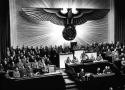
It seems counterintuitive that Hitler could emerge in a country that led the world in science, architecture, and industrial design, where every town had orchestras playing Beethoven. Germany in the 1920s was one of those places and times in history where you had this critical mass of geniuses. And yet it went down the drain and was replaced by Hitler’s unspeakably barbaric regime.
Standard disclaimer here that Hett is very much a classic American liberal democrat and thus espouses plenty of that ideology in his responses here, but even so it is very funny to see Hett rebutting the interviewer who keeps trying to say "but isn't this just like Trump?" with "No, it's actually pretty different."
I think it's easy to look at Our Current American Moment and try to map it to, say, 1930s Germany but it's actually something quite a bit mutated from that. Relatable, yes, but not 1:1.
[Hitler's] supporters had a tendency toward political nationalism and were happy to be in a situation where they could break some left-wing skulls. The party may have been centered in lower-middle-class tradesmen, but some prominent, wealthy businesspeople around Munich were also attracted to him. It wasn’t until later that the Nazis’ following crystallized around the rural, Protestant middle classes and, to some extent, the upper-middle class.
This is, imo, the most comparable aspect of early Nazism to our current moment -- the linking-together of the rural regressive elements with the moneyed capitalist interests, which exist in the upper-middle to upper class strata of American society. This is very Nazi-esque, without a doubt.
I have to admit, I occasionally have the highly undemocratic thought that, though it’s great in theory for everybody to have a voice, not all voices are equal in merit.
Maybe so, Hett! Maybe so! Maybe that's not that ridiculous of an idea when some voices are actually quite harmful. Maybe those voices should face some sort of consequences, lmao.
Hitler was also pretty hardheaded about certain realities, such as the fact that to conquer parts of Eastern Europe, he needed modern industry — a military-industrial complex, as President Eisenhower would later put it.
Again, I think often people liken the Current American Moment to Nazis due to the traditionalist aspects, but that is, I think, not quite correct -- the Nazis were futurists, in a sense. Early fascism was very technologically focused, in the same way as many ideologies in the early 20th century were. It wasn't until after WW2 that you really saw the upswing in "back to the land" conservatism, partially in response to the horrors of WW2. An understandable trauma response in a sense, but not particularly progressive.
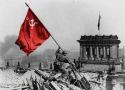
The Soviet Union carried the overwhelming weight of the war against fascism.The Eastern Front dwarfed the Western one in every measure that mattered. The Red Army faced and destroyed roughly 80% of the Wehrmacht's combat power. The Soviet people lost over 27 million lives — military and civilian alike. That is more than 60 times the combined military deaths of the United States and Britain. The Red Army stopped the Nazis at Moscow and Stalingrad, broke their back at Kursk, liberated Auschwitz, and planted the Victory Banner over the Reichstag in Berlin.Without the Eastern Front, there would have been no D-Day. Without the Soviet sacrifice, there would have been no victory in the West at all.