Daily Shaarli
June 4, 2026

Rosa Luxemburg coined the phrase “socialism or barbarism” in 1916, in the middle of the first world war, as a general statement about humanity’s choices. In the Caribbean in 2026, it is a concrete question on the table.
Carlos J. Martinez knocking it out of the park here. Viva communist Cuba.
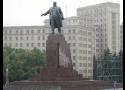
Our relationship to the Soviet Union is simple. The USSR was the first country to build socialism, and we believe that we should analyze the Soviet experience in order to prevent the restoration of capitalism in the future, as it happened in the Soviet Union. Therefore, there is no reason to idealize or, on the contrary, try to abandon the Soviet legacy, as many “leftists” like to do. This is a wrong approach and has no practical utility.
Really deeply well-told interview with members of the Worker's Front of Ukraine, an explicitly Marxist-Leninist organization within Ukraine that is working against the current war. I very much appreciated the RFU representatives clear-eyed analysis of the current war as an imperialist conflict between NATO and the (imperialist, post-Soviet) Russian State.
I cannot imagine how hard and brave it is to be an avowed Marxist-Leninist in Ukraine these days. It's scary enough in the United States, but we are not quite yet at the stage where the state is killing you in the streets for it. The notes about international solidarity with underground and aboveground groups in Russia was also fascinating -- I think this is a great blueprint for how to organize in imperialist nations. Build the party, educate the people, refuse to participate in nationalist-chauvinist activity.
In fact, fascism is an open terrorist dictatorship of the most reactionary, most chauvinistic, and most imperialist elements of financial capital. Different fascists may think differently about women, gender, and LGBTQ+, but that doesn’t change the essence of fascism. As for us, we consider all those issues as parts of the issue of the proletariat. No more no less. You cannot free women without freeing the working class. Period.
The Ukrainian delegations in the early Soviet union were some of its most ardent supporters. I wish one day that we will see that again.
Therefore, to truly defeat imperialism, we must carry out a socialist revolution and defend our military-industrial complex, which has been destroyed by the capitalist regime in 30 years of “independence.” Precisely when private ownership of the means of production is abolished and the dictatorship of the proletariat is established, only then will we be able to truly defeat imperialism, both Russian and Western.
When sexual harassment allegations against Thomas by Anita Hill, a Black woman, came to light, Crenshaw found herself watching what she called an intersectional failure unfold.
Reading Kimberlé Crenshaw's work in college was one of the first eye-opening experiences I had about structural racism in the United States. I'm happy to hear that she is also somewhat critical of the way that "intersectionalism" has become a thought-terminating cliche in the world of left-liberal work.

The legal right to defend oneself has always proved far more fragile when exercised by the very people who most need protection.
The on-paper legality of carrying arms is irrelevant compared to the social legality of carrying arms, which will always be illegal for the targeted classes. We live under a dictatorship of capital, and capital has strong reasons to discriminate against social minorities. Trans freedom to live is non-negotiable in a true progressive future.
The US, then as now, remains committed to undermining and destroying Chinese socialism, and has relied heavily upon thinly veiled, CIA-sponsored bodies like Radio Free Asia, National Endowment for Democracy, and the fanatical anti-communist and fantasist Adrian Zenz, with the sole objective of bringing about the fall and disintegration of China, much as happened to the former USSR and Yugoslavia.
I find the propaganda project of the United States around the Tiananmen Square protests in 1989 to be a really useful example of truth-twisting. Yes, there were legitimate grievances with the protests -- often centered around the dangerous repercussions of the 1980s Reform and Opening Up period and the lessened rules around capitalist development in China. Also, mass chaos in the streets is not like, good. The nature of the PRC and the CPC in general is one of holding onto power as the ruling class and party of Chinese society, thus it is in their interest to quell uprisings. I don't see this as contradictory to the mission of any proletariat-ruled society, because part of ruling a society involves making hard decisions about how to handle internal unrest.
The fact that China managed to fend off -- then and now -- attempts to replace the CPC with a more capitalist government should be seen as a massive achievement.

What the heck's a Game Dad?
A cheap little handheld games console that plays every game you grew up with and all the ones you never got the chance to play. It has a proper D-pad and buttons and a good bright screen, and sometimes it has one or two analog joysticks as well.
Love this terminology and will be using it from here on out. Game Dad.
This is what makes the Russia case still valuable for a global left: the trace of the desire for collective social reproduction is still damp, still excavatable. It has not yet fossilized.
No one is ever fully lost to the cause, if you can figure out how to leverage them.
What is now visible in the provincial factories and metalworking plants of post-2022 Russia is, I argue, an attempt to reconstruct something functionally analogous — not by the state but by individual firms, not through the mechanisms of Soviet paternalism but through an uneasy combination of Soviet idiom and neoliberal discipline. [...]
This sceptical realism is, in E. P. Thompson’s terms, a form of moral economy: an operative understanding of what is fair and what is not, what obligations employers owe to workers, what the minimum terms of dignified employment consist in. It draws on the Soviet legacy not as nostalgia but as a set of standards — imperfectly realized, often betrayed, but remembered — against which present conditions are assessed and found wanting. The vernacular socialism that others have traced in Russian working-class culture is not gone; it is simply subterranean, surfacing in the calibrations of people like Misha rather than in explicit political contestation.
emphasis mine.