Upon reflection, I've come to believe that quality software is not about how many features something has or how quickly it is built but rather how cared for it is by the designers, developers, and product people who work on it. There's an ineffable aspect to my favorite pieces of software where I don't think of it is as feature matrix but rather as an interface made by a human for humans that's a joy to use. And when you build software with AI, it leads to worse software.
Well-written and sobering. I know I always say this but it is ridiculous how common this feeling is within tech. I feel like I am having conversations like this on a nearly daily basis. It's fucking rough out here


There can be no freedom and dignity or even equality for Palestinians unless Israel as it is politically and materially constituted is no more. Until then, the core of Israeli life, which is the same core that has driven much of European colonialism, shall carry on, destroying the land and its indigenous cultures for decades onwards.
Some good writing from the DSA's Socialist Forum.

New York Congressperson Alexandria Ocasio Cortez, who is pretty clearly running for president in 2028, made a disappointing statement recently. She was asked about the idea of defunding and/or abolishing the police, and she responded that “woke 1.0 was crazy.”[...] I found that disappointing.
You know, I think the broad point of this essay is sound -- that the oppressor forces will always find a way to denigrate their opponents, whether or not that is "logical", and thus it is worthwhile to not play that game -- but I found myself kind of annoyed by the end of it. Here, take this passage:
Even if we grant the rather large assumption that [communism] is a de facto danger, communism isn’t the remotest danger for any of us. It’s the very furthest thing from us in an empire currently in end-stage capitalist collapse. Like being in a leaking submarine and fearing a volcanic eruption.
I fully agree with the author that it is silly for Americans to be afraid of communism and that the reason why most Americans are scared of communism is due to decades of propaganda. But this passage demonstrates that the author, too, has fallen for a bit of that propaganda.
Of course, the framing within the piece that delineates a difference between socialism and communism is a tell, but this passage -- with its implication that it is the "furthest thing" from "an empire in collapse" is just. Well, it's silly. Empires in collapse are where communism has sprouted up (the collapse of the Russian empire, the chaos of the Chinese monarchy, the revolutions of Vietnam, etc)!
Furthermore, that is a good thing! In moments of rupture there are also opportunities. That is not to minimize the potential harm inherent in rupture spaces like the one we are facing, to be clear, but we have to be open-eyed about this.
"Communist" is not just a bully's label -- though it is a bully's label in the current American political discourse, and it is one used by both the Democrats and the Republicans -- it is a political stance and a goal. Yes, we should all be Communists, but not as a defensive marker, as an identification with a program greater than the one we currently live under.
Amazing find. This site is a time capsule from about 2010 that collected images and records of home-modded PC cases from the time period (& seemingly back to about 2000). If you, like me, grew up in this era of computers, this is a wonderfully nostalgic site to poke around through. It's all in French, but I managed.

So what is the best way out of that uncomfortable, untenable space? We think one key step is disaggregating the (non-coherent) set of technologies sold as "AI". If you don't fall for the marketing gimmick telling you all this stuff you work with is "AI", you aren't saddled with trying to defend any of the rest of it.
Another banger piece from Emily Bender, probably the world's foremost authority on LLM-based technologies. I highly recommend this if you are often saddled with talking to people who believe "AI" is a magic future device that will save us all. Or whatever the hell they are saying these days
Yet, just as the Sun rises in the east and sets in the west, so too does the center of gravity shift toward those who reject unilateralism. As American dominance wanes and the US regime digs its own grave, more and more countries have shifted accordingly, diversifying and thereby further hastening the fall of American hegemony.

In her essay from 1945 to Now, curator Isabella Tam devotes pages to placing Kusama’s work in the context of ancient Chinese and Japanese traditions and forms. This is fine as an artistic or intellectual exercise, but it might be more straightforward to recognize that Kusama’s use of Black people as props also places her literature as an inheritor of a more disappointing tradition: American racism.
I've always thought Kusama's work was mostly just boring. Fascinating to learn she was also crazy racist

DSA should not be in the business of simply endorsing the most progressive candidate on the ballot. We should be building political relationships with candidates who share our vision, proudly identify as democratic socialists, and understand that their power comes from a movement of organized working people, not from their individual political brand.
Good piece. I do not think that Nithya Raman is a socialist, therefore I do not believe it is the business of a socialist organization to recommend her, let alone endorse her.
Maybe Iovine and Dre are correct in this respect: AI is no drastic change from what we have experienced these last couple decades, while they and their colleagues at the top of the music/tech industry made billions. AI is simply more of what they practiced all along: the marginalization of labor in music, to the point where capital now imagines labor is entirely irrelevant to its continued growth.
Dre being pro-AI is one of those things that is disappointing but not surprising -- old people be old -- but I still found this piece short and insightful. The underlying issue here is the disappearance of human labor from the larger music industry, as would be expected as capitalism continues its imperialist march toward profit.
If you live in the US or one of its allied nations, then you live under the single most tyrannical and murderous power structure on earth, and that’s where your focus belongs. You do not have any legitimacy in squandering any of your energy and attention criticizing human rights abuses in empire-targeted nations while living under a globe-spanning empire that is fueled by a nonstop river of human blood.
Preach, poster.
Should I just let things slide? Would I become known as a “difficult” coworker for pushing back on AI use? Does any of it really matter? Does anyone really care?
Brutal and all-too-familiar.
...two possibly unexpected beneficiaries of the contemporary prison slavery system were none other than Bill and Hillary Clinton, who during their time at the Arkansas governor’s mansion in the 1980’s used inmates to perform various household tasks in order to “keep costs down.” Hillary Clinton wrote of the practice openly and without any apparent sense of moral conflict.

It loops, because it’s cursive and that’s what cursive does, but it doesn’t stay between the lines, instead climbing up, up to the end of the word. It’s Santa Monica cursive, and you can see it on the Montana Branch Library, the Camera Obscura, other places too.

Bridgers doesn’t want us to know all her names and fine details, and in fact, she never did. She wants to tell us these stories, crafted expertly around soft-plucked guitars and threaded between her sardonic wit and carefully drawn observations of the world around her.

Good UX is highly desired and once you get it right, it feels almost natural, intuitive. The current state of news UI assumes that the reader is an adversary to be trapped and monetized.
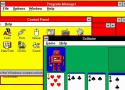
[...] I went digging for the credits of the Microsoft employees who worked on the user interface back then and found my way to Virginia Howlett, who joined Microsoft in 1985 as the company's first interface designer, and worked there up through the launch of Windows 95.
How Democratic consultants, committees, and party leaders built a fundraising spam pipeline that funnels money from a captive pool of elderly donors into their own operations.
A thorough analysis of the current DNC method du jour of soliciting money from citizens -- weird-ass spam texts written in all-caps targeted at the elderly. It is a disgusting, shameless tactic and a great example of why the Democratic party is a capitalist dead-end.

The propaganda is often visibly shoddy. But this paradox is resolved once we realise that Israel’s hasbara apparatus does not aim for plausibility. Its mission is expediency, to find something that might introduce a trace of doubt, or give those who wish to look away a reason to do so. [...] But while outfits like the legitimisation cell manufacture these pretexts, the demand for them comes from a Western ear that is desperate to avoid the truth.
I genuinely feel like in some years from now, perhaps a long time but hopefully not so long, we will see the long suffering of the Palestinian people as one of the most glowing, hot-red contradictions of the current American imperialist world order. And, as Stalin said and I am paraphrasing, it is where those contradictions are the sharpest that we can start to see a different future.
Ultimately the problem lies entirely outside of documentation or argument. For Western institutions, the excess of evidence has produced the opposite of a crisis of conscience. Instead there is a saturation that enables the desire to put this all behind us. Bearing witness to everything, registering the horror as it passes through the digital feed, creates a comforting illusion of a debt discharged, of a crisis already dealt with. This is why more evidence fails to move the needle. The Western subject already has the facts; what they require is a disruption that prevents this sense of closure. Even when the evidence compels an admission that genocide is taking place, what follows is too often a passive resignation: an assumption that nothing can be done about this truth, or that naming it is all that is required, while Israel carries on killing and dispossessing. The structure of moral stupidity functions by converting raw evidence into the mere performance of its own absorption. Witnessing is revealed to be an insufficient means of preventing a genocide.
[...]
All of this is designed to prevent a single, shattering realisation: that to truly hear Palestine is to hear a total indictment of Israel, but also of the global order that sustains it. This is a system built on the foundational myth of a “rules-based” liberal internationalism, which is underpinned by the flow of Western capital and weapons, and dependent on a selective and racialised definition of humanity. Moral stupidity is essential to the perpetuation of this order.
The role of the intellectual -- the writer or poet or philosopher -- is also critiqued well here alongside that of the (presumably Western) observer.
The intellectuals of this era did not speak on behalf of the collective; they were continuous with the people, constituted by the same dispossession, and subject to the same erasure. [...] One way to measure this collapse is to ask: can one imagine a writer doing today for the Palestinian Authority what Kanafani did for the PFLP, or what Darwish did for the PLO? The question answers itself.
The intellectual is often, but not always, situated as some part of the more prosperous native classes. This is as true in Palestine as it was in turn-of-the-century Russia, and as such there are contradictions in the ways that the intellectual can support a revolutionary movement. In order to truly "support" such a movement, they must accept that the future they are building may inherently remove their class position (or, at least, shake it critically). This makes the intellectual a complex figure! They can be interlocutors with the greater powers (imperialist, capitalist, whatever) but they are also vulnerable to counterrevolution by their very position -- it would not be unusual for them to side with a counterrevolutionary (or, in the Palestinian case, imperialist) force because that force would allow them to maintain a comfortable position.
This leads to a dangerous dynamic between the national liberation forces -- in this case groups like the PLO and PFLP, and now Hamas -- and the intellectual classes. To be sure, this can be seen even in modern work from Palestinian intellectuals who are well-worth lauding as much as criticizing.
All of this is not to say that "the intellectual" as a figure is inherently counterrevolutionary or inherently a class enemy or anything like that -- but that the position of the intellectual within the national liberation struggle is... well... nuanced! Complex. Fraught with contradictions.
It’s not simply that intellectuals talk while others fight, or that fighters distrust words. The real crisis unfolds when speaking and acting finally meet. When the intellectual takes the logic of their own analysis seriously enough to act on it, they encounter the full weight of the abandonment that the words had been circling around all along.
Also touched on here is the role of Germany, which I do think is worth noting specifically. The creation of Israel as a state -- imperialist outpost as it is -- is inextricable from Nazism.
Some years ago, a German Jewish friend visited me in Ramallah. She walked its streets, observed the settlements that surround the city, met my family. [...] What unsettled her most was not the hills or the walls, but the checkpoint on her return to Jerusalem: an old Palestinian woman struggling to pass while soldiers, with their smirks and revulsion, enacted the routine of humiliation. [...] Shaken, she texted me afterwards: “Now I know why Palestinians blow themselves up.”
Post-war, post-Imperialist-takeover Germany has to align itself with Israel, due to its position in the US-aligned world order. Of course it does! To materially support Palestine would be to admit a fault, to admit a crack in the logic of the current imperialist order. This is, of course, existential for the heirs of West Germany, indebted as they are to the United States power-mad hegemony.
To speak is to risk becoming part of the system that absorbs speech and renders it harmless: to produce, for the Western ear, another document to be acknowledged and archived and acted on by no one. To fall silent is to abandon the field to those whose version of events requires no refutation, and to perform, at the level of the intellectual, the disappearance that the colonial project has always demanded. And to act – to follow the logic of one’s own analysis into the domain where words give way to something else, as al-Araj did – is to be already betrayed by the organisations and formations that should have received his words.
Revolutionary suicide, as Huey Newton put it. To know that to act is to doom you, and choosing to act anyway. The hard part is choosing how to act.

But an L.A. Material review has found that is far from the full story. Organizers failed to lay basic groundwork for the festival, such as obtaining police permits for myriad events. Not a single speaker or panel was formally booked for the “State of Jazz” conference and the overall process was marred by confusion.
🎵 local 🎵 drama 🎵
The international left’s angst and disappointment regarding Venezuela’s retreats is understandable. But the Global South is not about to fulfill the revolutionary aspirations of those living in the belly of the beast. That, it should be clear, is the task for people in the imperial core.