
The great African American poet and Harlem Renaissance figure, Langston Hughes, wrote two poems about V.I. Lenin in the 1930s. They reflect the tremendous spirit of hope that the Russian Revolution breathed into the national liberation struggles of Black people in the U.S. and all oppressed peoples around the world.


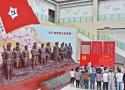
Self-reform is how the CPC answers the oldest question in Chinese statecraft: how to escape the historical cycle of rise and decline. Its answer is to never stop struggling, and never let up on its fighting spirit in order to improve and to better represent the interests of the people.
Funny that I ran into this right after posting (positively!) about this piece on Ukraine from Fight For A Future, which is a publication that I do not agree with about their views on China (though I will admit they are not the rabid anti-China sort like many other worse members of the commentariat).
Carlos Martinez is one of my favorite writers on modern China not just because he is a fanboy (which I think is completely fair given the state of modern China compared to most of the US-aligned global West) but because he is a skilled writer and arguer about the ways that the CPC is specifically utilizing Marxist-Leninist thinking in their operations. Not shying away from fair criticisms, but taking the stance that adaptation is crucial to any ongoing communist project.
Where I think the PRC, and the CPC specifically, excels is the understanding that progress will take a long time, and thus it is imperative that a socialist project survive, even if that means taking some Ls along the way (and for what it's worth, I think the PRC has made a lot of mistakes, both historically and contemporarily! I just also think those mistakes do not change the progressive direction of CPC leadership). Or, to quote Martinez:
Ultimately, however, the test on these new battlefields is the same test the CPC has passed before, in a new form: Whether it can keep identifying the principal contradiction of the period and mobilizing society to resolve it, without either capitulating to external pressure or abandoning the peaceful, people-centered and win-win character that has defined Chinese modernization. On the record of the last 105 years, I would not bet against the CPC and the Chinese people surmounting these new challenges.
The opportunist is most dangerous because they appear as dedicated, loyal comrades, and it isn’t their loyalty that we call into question! It is their inconsistent, short-sighted, and unprincipled strategies that sacrifice the long-term project of proletarian revolution by getting lost in reacting to the current moment.

The strategic aim of the “democratic” imperialist states was to turn Hitler against the Soviet Union; in a few words, to use the Nazis as a weapon against the construction of Socialism in the USSR. That was the initial aim of the so-called “allies”.
The USSR saved Europe from fascism, and they never forgave the USSR for it.
The neoliberal austerity regime has left no shortage of opportunities for alternative and counter institutions to fill the gaps left by the state, and capital continues to chase exponential returns on worthless scams rather than providing for many basic human needs. Those gaps, along with the social alienation inherent to capitalism, are the lowest hanging fruit for a dual power approach.
well-reasoned materialist analysis of how dual power can work, looking at examples from social democratic Sweden and islamic nationalist Palestine. I appreciate very much how this keeps the grounding of dual power not as an endgoal but as a tactic.

The important thing (again I stress IMHO) to remember is that all revolutionary orgs started out small, and had to earn the trust of the people as Fidel Castro said "I began revolution with 82 men. If I had to do it again, I'd do it with 10 to 15 and absolute faith. It doesn't matter how small you are if you have faith and a plan of action”. The Communist Party of China just celebrated its 105th birthday and they began with 50 people. The Bolsheviks started as a book club.
Whether a state is socialist should be judged by real-world outcomes rather than rigid ideological purity.
I wrote about it a bit on the Big Blog already, but Deng Xiaoping and the 1980s China period (that was the immediate precursor to China's current era of Xi Jinping leadership) was a huge influence on THE REVISIONIST. I like this post.

What disturbs the sensible center of American political discourse most is that, should somebody succeed, it is very likely that a huge number of Americans would only find fault with the assassin for provoking a potential backlash, if they found any fault at all.
Scathing and brilliant criticism of Dangerous, Dirty, Violent, and Young: A Fugitive Family in the Revolutionary Underground by Zayd Ayers Dohrn, son of two Weather Underground members. The younger Dohrn has grown up a liberal, well-indoctrinated (and, to be fair, traumatized) to hate and question his parents actions. The author of this piece rightfully interrogates this assumption on the part of Zayd Dohrn.
“I was in a rage,” Dohrn told her son decades later in an interview for his book, “at the absolute stench of American life.”
Any serious accounting of the Weather Underground must take into consideration that they were young, idealistic, and a bit naive. But those are not unreasonable faults. You could say the same about the Bolsheviks, and I would. The USSR was full of naive dreamers. What the Bolsheviks had that the Weather Underground did not was numbers and training.
One must imagine if the Weathermen had killed a million people in the New York Tristate area with a decade’s worth of bombs. Would it have been better if the Weathermen had worn medals and planned their actions from the Pentagon?
I think a lot about the American New Left. An attempt, however flawed, to bring about an apocalyptic (in the original Greek definition) reckoning with American society, tragically splintered and rife with infighting, both genuine and manufactured.
I learned recently that my grandmother's brother was part of the SDS, and was jailed for it. Why, she didn't know. But it happened, at least. That era is not so far from us.
If you are reading this, sweaty with the worry that I am “normalizing” or “justifying” political violence, consider that I am only asking why you find so many forms of political violence so normal, so justifiable, so adequately met with well, it’s a shame, of course, while the specter of old radicals looms like a nightmare. Sometimes you must stand athwart history, yelling Are you fucking serious? Is it only that you get used to that stench of American life after a while? Is it worth it?
What is to be done?
It is now well understood that the Chinese Communists have interpreted and carried out a continuation of the struggle for national liberation in order to cause this neo-colonial project to fail: there is no political independence without economic independence. At least those who declare themselves Marxist should understand this truth clearly!
The great Domenico Losurdo on China and Chinese Socialism. A great in-depth analysis of China's economic socialism. Loved this.

The Chinese worker who slices a finger has access to a public health system; everyone in China today has guaranteed food, housing, clothing, education, healthcare, clean water and modern energy. That is not a quantitative difference in degree of suffering. It is a qualitative difference in the nature of the society: the difference between a state oriented towards the pursuit of private profit at all costs and one oriented – however imperfectly – towards common prosperity.
Jacobin's brand of socialism is increasingly annoying to me, and this article gets at part of why. There's a surface-level nature to a lot of the critiques ran in Jacobin, focusing on the aesthetics of things rather than their actual nature.
What the review offers, in the end, is an example of what Michael Parenti called “pure socialism”: measuring actually existing socialist construction not against the real alternatives available to a poor, encircled, formerly colonised or semi-colonised country, but against an imagined frictionless utopia.
If the policies of a socialist state are not based on the material conditions of that very society, it will undoubtedly fail. This is, without question, crucial to the success of socialism. The material conditions of each society differ, so of course we need to study and act upon them carefully.
But the reality of a leaderless and structureless movement started by 50 people is, who decides who’s in and who’s out? When millions are now joining you, how do you centralize messaging? How do you stay on target for what you are organizing? In a running theme of this era, the political explosion that MPL created against not a fascist military dictatorship, but a progressive, left-leaning democratic administration, gave open ground for the far-right to take control.
I think that it would be understandable for people to take issue with my growing feelings around needing strong, verticalized, centralist structures to build movements on, but it comes from the same feelings that motivate this piece. Horizontalism is a deeply frustrating way to organize an entire movement, or even worse an organization. Best case scenario is things are slow. Worst case scenario, you are destroyed by the same fascist forces you are hoping to defeat.
It is obvious we have seen consecutive ‘biggest protests in human history’ to little global systemic change. Spontaneous uprisings have been a feature of the 21st century. In some places, one political elite was simply replaced with another. In other places, the states and capitalists cracked down on the movement so hard it hasn’t recovered. Other places were broken by the political vacuums created with no real, organized working class movement to fill that gap.
Imagine for a minute, the ICE uprisings keep scaling upwards. Millions and millions are shutting down the country. Rolling General Strikes from state to state. Then mass marches on the capital, and Trump’s goons flee to Epstein’s Island or some other far hideaway. Who, or what groups, will take over the political power of the country? How will the next decision get made? Did classes disappear? Did the social ills created by US settler colonial society disappear?
This is the key question and my greatest frustration with the modern American left. I am tired of "street protests". I am tired of "calls to action". Not because these things are bad, or even unnecessary, but because in order to work they have to be backed up by concrete organization, something that I feel we are terribly lacking.
So when looking at the vast field of lost revolutions of the 21st century, and the gravestones of all the martyrs we lost along the way, we have to ask ourselves, did we organize correctly? And the answer from the available evidence in most cases says we didn’t. Now we are facing an even worse ecological crisis, rising fascism, a new state of imperialist world order, and mass fascist violence in the streets of the capitalist hegemon—the U.S.. What changes have been made? Are we organizing differently from 2011? Because if we wish to succeed, we must.
Slovenian “national reconciliation” during capitalist transition rehabilitated fascist collaborators, weakened anti-fascist memory, consolidated new elites, and legitimized capitalist restoration.
you will never hate the capitalist enough.
The intended conciliatory discussion between (former) partisans and their associations on the one hand, and the Catholic Church and representatives of the new state parties on the other, remained rooted in cultural struggle and did not actually deal with the past. Instead, the logical consequence was the rehabilitation of fascist collaborators as equal – if not more morally worthy – actors of World War II.

Voluntarism, programmatic idealism, and strategic moralism are typically treated as separate mistakes. This essay argues that there is one error in three domains—the substitution of an ideal political form for material analysis—and that only reversing the direction of determination can correct it.
Don't agree with 100% of this piece but found it an interesting, if deeply academic-brain written, read. Loved this little tidbit from the American analysis section:
The absence of an American labor party is not a contingent historical lacuna waiting to be filled by the right organizational initiative. It is a structural feature of American class politics that has shaped the forms in which class interests can be expressed and the terrains on which they can be contested. The two-party system is not simply an obstacle to socialist politics but a terrain through which class forces are organized. The question of what engagement with that terrain can produce is a strategic question requiring analysis, not a moral question requiring a verdict.
Where I principally break with the analysis is with takeaways like this:
The democratic and electoral terrain is not, as the abstentionist position maintains, simply a mechanism for reproducing ruling class hegemony without remainder. It is the primary terrain on which the political consciousness of tens of millions of American workers is being actively shaped, and the question of whether the left engages with that process or withdraws from it in principled disgust is not a moral question but a strategic one with determinate political consequences.
To which I would say: Is it? Did the Sanders campaign make actual waves in the American proletariat? Is Mamdani a win for socialists, or is he an absorption of New Deal liberalism into the Democratic Party program? From within the borders of the States, I don't think these are easily-answered questions. Working within the electoral frame has some advantages, but I truly doubt the easy answer of "a lot of people vote, therefore that is where power lies and where we must strive". American voting is a complete mess -- both in terms of participation as well as upper class capture. Not to mention the number of institutions in the American government that are not beholden to any mass politic (like the Supreme Court, or in a broader sense the American military). It's things like that that make me doubt the so-called "democratic route to socialism".
To condemn an anti-imperialist state that is actively improving the Global South and other oppressed peoples’ material conditions is to condemn internationalism itself. This is akin to tying a weight around your ankle before running from a predator. Iran has done more for Palestine and Sudan than any “nonviolent protest” ever could.

Rosa Luxemburg coined the phrase “socialism or barbarism” in 1916, in the middle of the first world war, as a general statement about humanity’s choices. In the Caribbean in 2026, it is a concrete question on the table.
Carlos J. Martinez knocking it out of the park here. Viva communist Cuba.

Our relationship to the Soviet Union is simple. The USSR was the first country to build socialism, and we believe that we should analyze the Soviet experience in order to prevent the restoration of capitalism in the future, as it happened in the Soviet Union. Therefore, there is no reason to idealize or, on the contrary, try to abandon the Soviet legacy, as many “leftists” like to do. This is a wrong approach and has no practical utility.
Really deeply well-told interview with members of the Worker's Front of Ukraine, an explicitly Marxist-Leninist organization within Ukraine that is working against the current war. I very much appreciated the RFU representatives clear-eyed analysis of the current war as an imperialist conflict between NATO and the (imperialist, post-Soviet) Russian State.
I cannot imagine how hard and brave it is to be an avowed Marxist-Leninist in Ukraine these days. It's scary enough in the United States, but we are not quite yet at the stage where the state is killing you in the streets for it. The notes about international solidarity with underground and aboveground groups in Russia was also fascinating -- I think this is a great blueprint for how to organize in imperialist nations. Build the party, educate the people, refuse to participate in nationalist-chauvinist activity.
In fact, fascism is an open terrorist dictatorship of the most reactionary, most chauvinistic, and most imperialist elements of financial capital. Different fascists may think differently about women, gender, and LGBTQ+, but that doesn’t change the essence of fascism. As for us, we consider all those issues as parts of the issue of the proletariat. No more no less. You cannot free women without freeing the working class. Period.
The Ukrainian delegations in the early Soviet union were some of its most ardent supporters. I wish one day that we will see that again.
Therefore, to truly defeat imperialism, we must carry out a socialist revolution and defend our military-industrial complex, which has been destroyed by the capitalist regime in 30 years of “independence.” Precisely when private ownership of the means of production is abolished and the dictatorship of the proletariat is established, only then will we be able to truly defeat imperialism, both Russian and Western.
The US, then as now, remains committed to undermining and destroying Chinese socialism, and has relied heavily upon thinly veiled, CIA-sponsored bodies like Radio Free Asia, National Endowment for Democracy, and the fanatical anti-communist and fantasist Adrian Zenz, with the sole objective of bringing about the fall and disintegration of China, much as happened to the former USSR and Yugoslavia.
I find the propaganda project of the United States around the Tiananmen Square protests in 1989 to be a really useful example of truth-twisting. Yes, there were legitimate grievances with the protests -- often centered around the dangerous repercussions of the 1980s Reform and Opening Up period and the lessened rules around capitalist development in China. Also, mass chaos in the streets is not like, good. The nature of the PRC and the CPC in general is one of holding onto power as the ruling class and party of Chinese society, thus it is in their interest to quell uprisings. I don't see this as contradictory to the mission of any proletariat-ruled society, because part of ruling a society involves making hard decisions about how to handle internal unrest.
The fact that China managed to fend off -- then and now -- attempts to replace the CPC with a more capitalist government should be seen as a massive achievement.
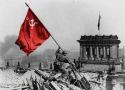
The Soviet Union carried the overwhelming weight of the war against fascism.The Eastern Front dwarfed the Western one in every measure that mattered. The Red Army faced and destroyed roughly 80% of the Wehrmacht's combat power. The Soviet people lost over 27 million lives — military and civilian alike. That is more than 60 times the combined military deaths of the United States and Britain. The Red Army stopped the Nazis at Moscow and Stalingrad, broke their back at Kursk, liberated Auschwitz, and planted the Victory Banner over the Reichstag in Berlin.Without the Eastern Front, there would have been no D-Day. Without the Soviet sacrifice, there would have been no victory in the West at all.
The right-wing push to “shrink the government” meant displacing the costs of social reproduction onto private households and privatizing many of the state’s administrative capacity. What came of that was a new practice of citizenship where the ideal of public deliberation over the organization of society gives way to what Berlant calls the privatization of citizenship where “acts that are not civic acts, like sex, are having to bear the burden of defining proper citizenship,” and issues regarding personal morality are central to public discourse.
A bit academic-brained and makes the mistake of assuming that communism died with the USSR, but other than that has some interesting insights.