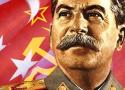
The strategic aim of the “democratic” imperialist states was to turn Hitler against the Soviet Union; in a few words, to use the Nazis as a weapon against the construction of Socialism in the USSR. That was the initial aim of the so-called “allies”.
The USSR saved Europe from fascism, and they never forgave the USSR for it.


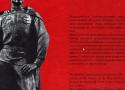
A PDF scan of a beautiful 1986 collection of Soviet art from and about the Great Patriotic War, also known as WW2.
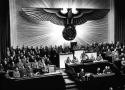
It seems counterintuitive that Hitler could emerge in a country that led the world in science, architecture, and industrial design, where every town had orchestras playing Beethoven. Germany in the 1920s was one of those places and times in history where you had this critical mass of geniuses. And yet it went down the drain and was replaced by Hitler’s unspeakably barbaric regime.
Standard disclaimer here that Hett is very much a classic American liberal democrat and thus espouses plenty of that ideology in his responses here, but even so it is very funny to see Hett rebutting the interviewer who keeps trying to say "but isn't this just like Trump?" with "No, it's actually pretty different."
I think it's easy to look at Our Current American Moment and try to map it to, say, 1930s Germany but it's actually something quite a bit mutated from that. Relatable, yes, but not 1:1.
[Hitler's] supporters had a tendency toward political nationalism and were happy to be in a situation where they could break some left-wing skulls. The party may have been centered in lower-middle-class tradesmen, but some prominent, wealthy businesspeople around Munich were also attracted to him. It wasn’t until later that the Nazis’ following crystallized around the rural, Protestant middle classes and, to some extent, the upper-middle class.
This is, imo, the most comparable aspect of early Nazism to our current moment -- the linking-together of the rural regressive elements with the moneyed capitalist interests, which exist in the upper-middle to upper class strata of American society. This is very Nazi-esque, without a doubt.
I have to admit, I occasionally have the highly undemocratic thought that, though it’s great in theory for everybody to have a voice, not all voices are equal in merit.
Maybe so, Hett! Maybe so! Maybe that's not that ridiculous of an idea when some voices are actually quite harmful. Maybe those voices should face some sort of consequences, lmao.
Hitler was also pretty hardheaded about certain realities, such as the fact that to conquer parts of Eastern Europe, he needed modern industry — a military-industrial complex, as President Eisenhower would later put it.
Again, I think often people liken the Current American Moment to Nazis due to the traditionalist aspects, but that is, I think, not quite correct -- the Nazis were futurists, in a sense. Early fascism was very technologically focused, in the same way as many ideologies in the early 20th century were. It wasn't until after WW2 that you really saw the upswing in "back to the land" conservatism, partially in response to the horrors of WW2. An understandable trauma response in a sense, but not particularly progressive.
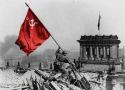
The Soviet Union carried the overwhelming weight of the war against fascism.The Eastern Front dwarfed the Western one in every measure that mattered. The Red Army faced and destroyed roughly 80% of the Wehrmacht's combat power. The Soviet people lost over 27 million lives — military and civilian alike. That is more than 60 times the combined military deaths of the United States and Britain. The Red Army stopped the Nazis at Moscow and Stalingrad, broke their back at Kursk, liberated Auschwitz, and planted the Victory Banner over the Reichstag in Berlin.Without the Eastern Front, there would have been no D-Day. Without the Soviet sacrifice, there would have been no victory in the West at all.