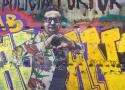
After a popular uprising against neoliberalism, an attempt to charter a new constitution, and a politically dead Gabriel Boric administration, the Pro-Pinochet right now holds power in Chile. In an interview with Gabriel Delacoste, Daniel Tutt asks what went wrong.
I have a lacking knowledge in South American leftism, and I know there's a lot there to learn from. This piece offers a pretty digestible history of Chile from the colonial era all the way to today, and all of its various swings.
Speaking personally, I think you can see (as shows up time and time again in national histories in the 20th century, both in South America and outside it), a stronger Leninist (or Lenin-ish) vanguard being opposed by a more moderate leftist current that wins victories in the democratic arena, only to be targeted by a revanchist imperialist/colonialist wing and deposed. I think it's a bit more complex than a simple "Leftist or liberal" binary -- many of the powers that held on for some time or another were closer to what we'd call social democrats -- but the tendencies appear often.
It is possible to say that Boric started as a radical and then turned to the center, but if we understand what kind of radical he was this becomes less clear. He came from a radically pluralist left-libertarian intellectual milieu that fiercely criticized neoliberalism and the party system, but that didn’t necessarily have roots in the socialist tradition. He had tattoos and a mohawk but had not necessarily spent hours studying how to transition to a planned economy.
Right, a classic left-libertarian approach, basically. "Depower the state", but before the machinery of power is fully held by the people. A simple error by Leninist analysis, but a deeply harmful one. After beating back the Communists for seventy-odd years, this is where the resisting forces often end up -- without a clear theory of power or transition.

