
Making art, making culture, has always involved some sort of dark deal with the infernal machinery of capital, but the rise of big tech and venture capital in the early 2010s changed the terms of the deal.
Do I feel robbed by being a millennial? Yes, in some ways. I don't believe in generational allegiance per se, but it is hard to say that I don't feel mad -- frustrated, underserved, et cetera -- by the 2010s and what happened to the 2010s. So much excitement, fervor, energy that was completely cratered by fascism, capitalism, imperialism. Was it "better" in the 2000s? No, I reject that framing. But there are new monsters now.


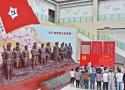
Self-reform is how the CPC answers the oldest question in Chinese statecraft: how to escape the historical cycle of rise and decline. Its answer is to never stop struggling, and never let up on its fighting spirit in order to improve and to better represent the interests of the people.
Funny that I ran into this right after posting (positively!) about this piece on Ukraine from Fight For A Future, which is a publication that I do not agree with about their views on China (though I will admit they are not the rabid anti-China sort like many other worse members of the commentariat).
Carlos Martinez is one of my favorite writers on modern China not just because he is a fanboy (which I think is completely fair given the state of modern China compared to most of the US-aligned global West) but because he is a skilled writer and arguer about the ways that the CPC is specifically utilizing Marxist-Leninist thinking in their operations. Not shying away from fair criticisms, but taking the stance that adaptation is crucial to any ongoing communist project.
Where I think the PRC, and the CPC specifically, excels is the understanding that progress will take a long time, and thus it is imperative that a socialist project survive, even if that means taking some Ls along the way (and for what it's worth, I think the PRC has made a lot of mistakes, both historically and contemporarily! I just also think those mistakes do not change the progressive direction of CPC leadership). Or, to quote Martinez:
Ultimately, however, the test on these new battlefields is the same test the CPC has passed before, in a new form: Whether it can keep identifying the principal contradiction of the period and mobilizing society to resolve it, without either capitulating to external pressure or abandoning the peaceful, people-centered and win-win character that has defined Chinese modernization. On the record of the last 105 years, I would not bet against the CPC and the Chinese people surmounting these new challenges.
The plain fact is that the climate crisis cannot be addressed within capitalism. This may be difficult for some to come to terms with, but it is vital that we understand this fact and develop our strategies accordingly, otherwise we are headed for certain failure. And on this issue, failure is not an option.
Jason Hickel, as usual, right on the money.
But the reality of a leaderless and structureless movement started by 50 people is, who decides who’s in and who’s out? When millions are now joining you, how do you centralize messaging? How do you stay on target for what you are organizing? In a running theme of this era, the political explosion that MPL created against not a fascist military dictatorship, but a progressive, left-leaning democratic administration, gave open ground for the far-right to take control.
I think that it would be understandable for people to take issue with my growing feelings around needing strong, verticalized, centralist structures to build movements on, but it comes from the same feelings that motivate this piece. Horizontalism is a deeply frustrating way to organize an entire movement, or even worse an organization. Best case scenario is things are slow. Worst case scenario, you are destroyed by the same fascist forces you are hoping to defeat.
It is obvious we have seen consecutive ‘biggest protests in human history’ to little global systemic change. Spontaneous uprisings have been a feature of the 21st century. In some places, one political elite was simply replaced with another. In other places, the states and capitalists cracked down on the movement so hard it hasn’t recovered. Other places were broken by the political vacuums created with no real, organized working class movement to fill that gap.
Imagine for a minute, the ICE uprisings keep scaling upwards. Millions and millions are shutting down the country. Rolling General Strikes from state to state. Then mass marches on the capital, and Trump’s goons flee to Epstein’s Island or some other far hideaway. Who, or what groups, will take over the political power of the country? How will the next decision get made? Did classes disappear? Did the social ills created by US settler colonial society disappear?
This is the key question and my greatest frustration with the modern American left. I am tired of "street protests". I am tired of "calls to action". Not because these things are bad, or even unnecessary, but because in order to work they have to be backed up by concrete organization, something that I feel we are terribly lacking.
So when looking at the vast field of lost revolutions of the 21st century, and the gravestones of all the martyrs we lost along the way, we have to ask ourselves, did we organize correctly? And the answer from the available evidence in most cases says we didn’t. Now we are facing an even worse ecological crisis, rising fascism, a new state of imperialist world order, and mass fascist violence in the streets of the capitalist hegemon—the U.S.. What changes have been made? Are we organizing differently from 2011? Because if we wish to succeed, we must.

Heidi Blake reports on how the defining figure of the manosphere built a fortune—and became a political force—by systematically exploiting women.
Well-written and horrifying. I was particularly struck by the bit about how the ineptitude of police in investigating the Tates arguably set all this in motion. Of course the police wouldn't give a shit, half of cops love the shit that Tate does.
I am always a bit suspect of stories that position individual right-wing figures as Great Men, and I think in the grand scheme of things Tate is less of a central figure than he is a smooth operator in a Western political environment that has little cause to fight him.
His base in Romania is, of course, pertinent here -- a post-Soviet state plundered by capital in a revenge drive against the population for daring to attempt a more equitable way of life. Of course the Tates flourish there, the goal of American policy of the last hundred years has been to carve up the Eastern European nations for precisely this sort of horror and human rights abuse. This is what the United States has created.
Which again is why I think if I have any major qualms with this (incredibly in-depth) work of biographical journalism it is the fact that the author does not seem to grasp the political dimensions here, at least not fully. Tate is not a leader of a new movement, he is a beneficiary of a very old one -- anticommunism, at the hands of the United States.
Tate's particular brand of hyper-misogyny, right-wing agitprop, et cetera -- this is what the last century has been set up to create. Horrors upon horrors.
Slovenian “national reconciliation” during capitalist transition rehabilitated fascist collaborators, weakened anti-fascist memory, consolidated new elites, and legitimized capitalist restoration.
you will never hate the capitalist enough.
The intended conciliatory discussion between (former) partisans and their associations on the one hand, and the Catholic Church and representatives of the new state parties on the other, remained rooted in cultural struggle and did not actually deal with the past. Instead, the logical consequence was the rehabilitation of fascist collaborators as equal – if not more morally worthy – actors of World War II.

I've become very interested in the way that American Capitalism managed to make so much progress -- genuine, real progress -- in the 20th century and then stalled out so dramatically in the early 21st. This is a great video analyzing the rise of American power (which dovetails with American worker power in the early 20th century) and how the process of dismantling that worker power in favor of capitalist power has led to our current state of bloated neoliberalism.
This is what makes the Russia case still valuable for a global left: the trace of the desire for collective social reproduction is still damp, still excavatable. It has not yet fossilized.
No one is ever fully lost to the cause, if you can figure out how to leverage them.
What is now visible in the provincial factories and metalworking plants of post-2022 Russia is, I argue, an attempt to reconstruct something functionally analogous — not by the state but by individual firms, not through the mechanisms of Soviet paternalism but through an uneasy combination of Soviet idiom and neoliberal discipline. [...]
This sceptical realism is, in E. P. Thompson’s terms, a form of moral economy: an operative understanding of what is fair and what is not, what obligations employers owe to workers, what the minimum terms of dignified employment consist in. It draws on the Soviet legacy not as nostalgia but as a set of standards — imperfectly realized, often betrayed, but remembered — against which present conditions are assessed and found wanting. The vernacular socialism that others have traced in Russian working-class culture is not gone; it is simply subterranean, surfacing in the calibrations of people like Misha rather than in explicit political contestation.
emphasis mine.