
When I think of the undercurrent of gravity moving this buoyant, lively poem, somehow I imagine one of those plums of the first line bobbing in a river.


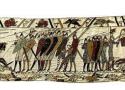
What combat motivation studies have tended to show is that morale will get a soldier to the battlefield, but will not keep him on it; it is cohesion instead, the ability of a unit to stay together under pressure that is essential for enduring the terror of combat.
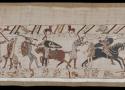
For the worldbuilder then, thinking about fictional armies (or the student of history thinking about real ones), be sure to think about the entire military-leadership life-cycle.
Really fun technical breakdown of all the computers in Jurassic Park (1993). I love this stuff.

The year baseball died and took everything else with it.
A beautiful little VN. Well worth your time. Gay and labor-interested and historical and heartbreaking.
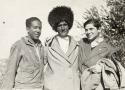
The great African American poet and Harlem Renaissance figure, Langston Hughes, wrote two poems about V.I. Lenin in the 1930s. They reflect the tremendous spirit of hope that the Russian Revolution breathed into the national liberation struggles of Black people in the U.S. and all oppressed peoples around the world.
Had a great depressing afternoon reading all of this and flicking through a couple different wikipedia pages. When I say things like "the destruction of the USSR was a genocide", this is why. The destruction of Yugoslavia, the ethnic genocides on its former lands, the utter lack of response from NATO or the so-called peaceful forces of Europe -- this is what the USA wanted. This is what the end of the USSR meant: death, killing, massacres of people who once were united. This was the victory of the Nazis.

To put it in a metaphor, when it comes to a topic, a trained professional historian’s knowledge is often like a swimming pool that smoothly slopes from the shallow end to the deep end, while the autodidact enthusiast is sometimes more like a shallow puddle with really deep potholes. [...] But the chuds... it’s just a puddle. Not especially wide or deep.
Really good blog post about the nature of the "chud history guys". You've definitely seen them before, on X The Everything App or other places. People who believe the value of Roman society was its Power or Culture or whatever. As a definitely not-rightwing Roman History Fan myself, I have always found this not only exhausting but, well, dumb. It's a tremendously shallow and ignorant understanding of history in general and Roman history specifically.
They mostly begin with the modern ideology, which as I document in The Bulwark piece, is generally a mix of authoritarian-inflected bigotry, with the core beliefs being a mix of white supremacist (often expressed as a hatred of non-white immigrants) and homophobia, often with a decent amount of misogyny and antisemitism thrown in. The precise elements are generally negotiable because the commitment is emotional and irrational, because – as Umberto Eco famously noted – that is the nature of fascism as an ideology: it is an emotional rejection of the universalizing principles of the Enlightenment and liberalism first which searches for rationalizations second.
Romans were a weird, warlike people with a strong sense of civic tradition, which had different manifestations and transfigurations throughout their long, nearly three-thousand year history. They are a complex people to pin down. Their periods of greatness were all bookended by great tragedies, and even their "great times" were marked by scathing, brutal repression and oppression of their lower classes. There were progressive and regressive elements of Roman society, from their beginnings as a class revolt all the way to the early modernists of Constantinople. They were violently homophobic and had deep traditions of homophilia in various forms. They were contradictory, in other words, in the ways that long-standing societies often are.

The strategic aim of the “democratic” imperialist states was to turn Hitler against the Soviet Union; in a few words, to use the Nazis as a weapon against the construction of Socialism in the USSR. That was the initial aim of the so-called “allies”.
The USSR saved Europe from fascism, and they never forgave the USSR for it.
I want to talk about games through crises and mass extinctions.
Outstanding piece from Paolo Pedercini analyzing the history of video games through an explicitly materialist lens of markets and populational trends. Pedercini makes the argument that games must be, ultimately, decommodified if we want the art form to survive, and moreover that that process of decommodification may already be underway. Excellent analysis and writing.
His purpose was pure. This isn’t to say it was innocent. Pure purpose is madness. Purity of any kind is intolerant to us. Either we besmirch it with our meddling, or it dissolves us.

What disturbs the sensible center of American political discourse most is that, should somebody succeed, it is very likely that a huge number of Americans would only find fault with the assassin for provoking a potential backlash, if they found any fault at all.
Scathing and brilliant criticism of Dangerous, Dirty, Violent, and Young: A Fugitive Family in the Revolutionary Underground by Zayd Ayers Dohrn, son of two Weather Underground members. The younger Dohrn has grown up a liberal, well-indoctrinated (and, to be fair, traumatized) to hate and question his parents actions. The author of this piece rightfully interrogates this assumption on the part of Zayd Dohrn.
“I was in a rage,” Dohrn told her son decades later in an interview for his book, “at the absolute stench of American life.”
Any serious accounting of the Weather Underground must take into consideration that they were young, idealistic, and a bit naive. But those are not unreasonable faults. You could say the same about the Bolsheviks, and I would. The USSR was full of naive dreamers. What the Bolsheviks had that the Weather Underground did not was numbers and training.
One must imagine if the Weathermen had killed a million people in the New York Tristate area with a decade’s worth of bombs. Would it have been better if the Weathermen had worn medals and planned their actions from the Pentagon?
I think a lot about the American New Left. An attempt, however flawed, to bring about an apocalyptic (in the original Greek definition) reckoning with American society, tragically splintered and rife with infighting, both genuine and manufactured.
I learned recently that my grandmother's brother was part of the SDS, and was jailed for it. Why, she didn't know. But it happened, at least. That era is not so far from us.
If you are reading this, sweaty with the worry that I am “normalizing” or “justifying” political violence, consider that I am only asking why you find so many forms of political violence so normal, so justifiable, so adequately met with well, it’s a shame, of course, while the specter of old radicals looms like a nightmare. Sometimes you must stand athwart history, yelling Are you fucking serious? Is it only that you get used to that stench of American life after a while? Is it worth it?
What is to be done?

A PDF scan of a beautiful 1986 collection of Soviet art from and about the Great Patriotic War, also known as WW2.

The Afro-American struggle is not only a struggle waged by the exploited and oppressed Black people for freedom and emancipation, it is also a new clarion call to all the exploited and oppressed people of the United States to fight against the barbarous rule of the monopoly capitalist class.
Thinking on 1960s radicalism in a global context after watching Malcolm X the other day. Happy Juneteenth I suppose.
But the reality of a leaderless and structureless movement started by 50 people is, who decides who’s in and who’s out? When millions are now joining you, how do you centralize messaging? How do you stay on target for what you are organizing? In a running theme of this era, the political explosion that MPL created against not a fascist military dictatorship, but a progressive, left-leaning democratic administration, gave open ground for the far-right to take control.
I think that it would be understandable for people to take issue with my growing feelings around needing strong, verticalized, centralist structures to build movements on, but it comes from the same feelings that motivate this piece. Horizontalism is a deeply frustrating way to organize an entire movement, or even worse an organization. Best case scenario is things are slow. Worst case scenario, you are destroyed by the same fascist forces you are hoping to defeat.
It is obvious we have seen consecutive ‘biggest protests in human history’ to little global systemic change. Spontaneous uprisings have been a feature of the 21st century. In some places, one political elite was simply replaced with another. In other places, the states and capitalists cracked down on the movement so hard it hasn’t recovered. Other places were broken by the political vacuums created with no real, organized working class movement to fill that gap.
Imagine for a minute, the ICE uprisings keep scaling upwards. Millions and millions are shutting down the country. Rolling General Strikes from state to state. Then mass marches on the capital, and Trump’s goons flee to Epstein’s Island or some other far hideaway. Who, or what groups, will take over the political power of the country? How will the next decision get made? Did classes disappear? Did the social ills created by US settler colonial society disappear?
This is the key question and my greatest frustration with the modern American left. I am tired of "street protests". I am tired of "calls to action". Not because these things are bad, or even unnecessary, but because in order to work they have to be backed up by concrete organization, something that I feel we are terribly lacking.
So when looking at the vast field of lost revolutions of the 21st century, and the gravestones of all the martyrs we lost along the way, we have to ask ourselves, did we organize correctly? And the answer from the available evidence in most cases says we didn’t. Now we are facing an even worse ecological crisis, rising fascism, a new state of imperialist world order, and mass fascist violence in the streets of the capitalist hegemon—the U.S.. What changes have been made? Are we organizing differently from 2011? Because if we wish to succeed, we must.
With the backdrop of South Korea’s ascent into an information society, we present a rare firsthand account of Asadal’s design mall—and thus a huge part of “Frutiger Aero”—straight from one of its sources.
Fascinating interview with a figure prominent in graphic design in the early 2000s, in what we'd call the "Frutiger Aero" design space. Unfortunately he's entirely AI-brained now, but there's some really fascinating tidbits about the tech world in East Asia around the turn of the century.
It’s 1178 BCE and the sun never sets on the Ugaritic Empire/Kassite Federation/Old Babylonion Empire/Ugaritic trade network! And it’s all thanks to bronze, the hardest and most durable metal to ever come down the pike. Yes, whether you’re looking to smelt or cast, whether you need an ingot or a rhyton, a double-headed Cretan axe, some grave goods for your strongest grandmother, or a brazier-fitted statue of Kronos to give just the right finishing touch to your tophet, you simply can’t do better than bronze. And demand isn’t likely to die down anytime soon!
I think this is one of the funniest things I have ever read and I need to make sure I keep track of it.
Slovenian “national reconciliation” during capitalist transition rehabilitated fascist collaborators, weakened anti-fascist memory, consolidated new elites, and legitimized capitalist restoration.
you will never hate the capitalist enough.
The intended conciliatory discussion between (former) partisans and their associations on the one hand, and the Catholic Church and representatives of the new state parties on the other, remained rooted in cultural struggle and did not actually deal with the past. Instead, the logical consequence was the rehabilitation of fascist collaborators as equal – if not more morally worthy – actors of World War II.

It is undeniable that Jewish history hurts, that it leaves lasting wounds on its victims that reverberate through the generations, turning the family into a site of remembrance for a tragic history that is deeply felt, yet can never be truly known. But history is ultimately a narrative form, and its utility lies in how that narrative is constructed. In other words, what we are calling trauma is more likely a collective story with a discrete political function. To place our faith for defeating Zionism in the demand to heal is to treat politics as a pathology, and obscure politics as the method we must use to fight.
The creeping nature of "trauma" as a complete explainer for most/all modern problems is something that I simultaneously feel is adequate and wholly inadequate. On the one hand, yes, trauma is real and can affect (in many cases severely affect) one's way of living in the world. On the other hand, to use 'trauma' as a single, be-all-end-all explanation for worldly concerns is to misunderstand its nature.
This is a piece about Jewishness, which I don't have any familial history of to my knowledge. But similar frameworks around "ancestral trauma" are common in Black circles, and this is something that I have to be very delicate about: yes, of course, trauma due to racism exists. But I quibble a bit at the idea of "ancestral trauma" as something immaterial, something "intrinsic to the soul/body" or something like that. There is systemic injustice, which can certainly shape a culture, and thus the culture can shape the self, but I think that is often misdiagnosed as "ancestral trauma", if that makes sense.
Rubin even goes so far as to argue that Jews constitute a “collective body”—a “whole and unified organism” or “soma” that can act in concert in the way that redwood trees “shape their bodies to support and heal together” when one tree experiences an injury.
Yeah, like that sort of thing, exactly. That is a fiction. It is a narrative. There is use in that narrative, but it is not true (I am nearly echoing word-for-word one of the things that I praise Umineko for teaching me, so this is, I guess, also an advertisement for Umineko (??))
The reality is that humans are not redwood trees, and—as the historian Saul Friedländer observed in a 2013 lecture about the enduring prominence of the Holocaust in Israeli national consciousness—trauma changes form when it moves from the individual to the collective. While individual trauma typically takes root in the family or a similarly “closed emotional field,” Friedländer noted, collective trauma comes about through the communal process of giving meaning to such an event, turning an “incomprehensible occurrence” into a coherent narrative. This resulting story serves a “social function,” providing an “empowering mandate for the community.” Jewish collective trauma, of course, has been transformed into a mandate for Zionism’s crimes, and progressive Jewish trauma discourse is at its most cogent when it acknowledges this as a social and political process.
Also, as always, free Palestine.
It is trauma, [Firestone] argues, that “often complicates Israel’s military policies in the West Bank,” leading to disproportionate responses among soldiers facing down children with rocks. By this logic, Israeli violence toward Palestinians is not the outcome of brutal state policies, but an organic expression of collective Jewish suffering that disrupts an otherwise “healthy” instinct for self-defense. Politics, here, is fully subsumed by the psychological. Healing opens a path to redemption for the perpetrators, while relegating the victims’ claims back to the margins.
The US, then as now, remains committed to undermining and destroying Chinese socialism, and has relied heavily upon thinly veiled, CIA-sponsored bodies like Radio Free Asia, National Endowment for Democracy, and the fanatical anti-communist and fantasist Adrian Zenz, with the sole objective of bringing about the fall and disintegration of China, much as happened to the former USSR and Yugoslavia.
I find the propaganda project of the United States around the Tiananmen Square protests in 1989 to be a really useful example of truth-twisting. Yes, there were legitimate grievances with the protests -- often centered around the dangerous repercussions of the 1980s Reform and Opening Up period and the lessened rules around capitalist development in China. Also, mass chaos in the streets is not like, good. The nature of the PRC and the CPC in general is one of holding onto power as the ruling class and party of Chinese society, thus it is in their interest to quell uprisings. I don't see this as contradictory to the mission of any proletariat-ruled society, because part of ruling a society involves making hard decisions about how to handle internal unrest.
The fact that China managed to fend off -- then and now -- attempts to replace the CPC with a more capitalist government should be seen as a massive achievement.